
Elevator mirrors do not make the elevator faster. They change what your brain is doing while you wait or ride. A mirror gives you something to look at: your face, your clothes, other passengers, the door behind you, or the space around you. That small distraction can make the same few seconds feel less empty, and sometimes shorter.
This is a well-known waiting-time anecdote. David Maister’s essay on waiting lines gives the example of a hotel group that received complaints about slow elevators. Instead of changing the elevators, the hotel put mirrors near the waiting area. People naturally checked their appearance, and complaints dropped even though the actual wait did not change.
There is a caveat, though. A Cornell paper later points out that the elevator-mirror story did not empirically prove that the wait felt shorter. The safer reading is that mirrors gave people something useful to do, which made the wait more pleasant and less empty. That can feel like a shorter wait, but it is not the same as proving that everyone estimated fewer seconds.
The useful idea is not “mirrors have magic.” It is that unoccupied time often feels worse than occupied time. Maister says occupied time feels shorter than unoccupied time, and he gives examples like menus in restaurant lines or interesting things to look at while waiting. A mirror is a cheap version of that: it turns passive waiting into a tiny activity.
Modern research on time perception points in the same direction. A Scientific Reports study found that paying attention to time made duration feel longer, while diverting attention away from time made duration feel shorter. If you stare at the elevator numbers and think “why is this taking so long?”, you are feeding your brain more time signals. If you check your hair or glance around in the mirror, less attention is left for counting seconds.
There is also a boredom effect. A Cornell paper on customer waiting found that perceived wasted time, perceived control, perceived boredom, and perceived neglect help explain how people judge a wait. It also found that having something to do during a wait decreased perceived boredom in one field study. The important caveat is that not every filler works. The same paper notes that boring or routine activities can fail or even make waits feel worse.
That caveat matters for elevator mirrors. A mirror usually works because it is immediately useful and low effort. You can check your appearance, see who is behind you, or orient yourself in a small space without being asked to do anything complicated. A 2026 Scientific Reports study on ride-hailing waits found that entertainment fillers shortened subjective waiting estimates and reduced boredom in that specific experiment, which fits the general point: attention and mood shape waiting.
Mirrors can also make the elevator feel less cramped. Psychology Today describes mirrors in elevators as serving several psychological functions: reducing the feeling of confinement, improving safety awareness, and giving riders a distraction. Those extra benefits can indirectly affect time, because anxiety and discomfort make short waits feel more noticeable.
So the short answer is: elevator mirrors can make waiting feel shorter, or at least less annoying, because they occupy attention, reduce boredom, and give people a small sense of usefulness or control. The elevator has not changed. The experience has. For a wait that lasts only seconds, that can be enough.
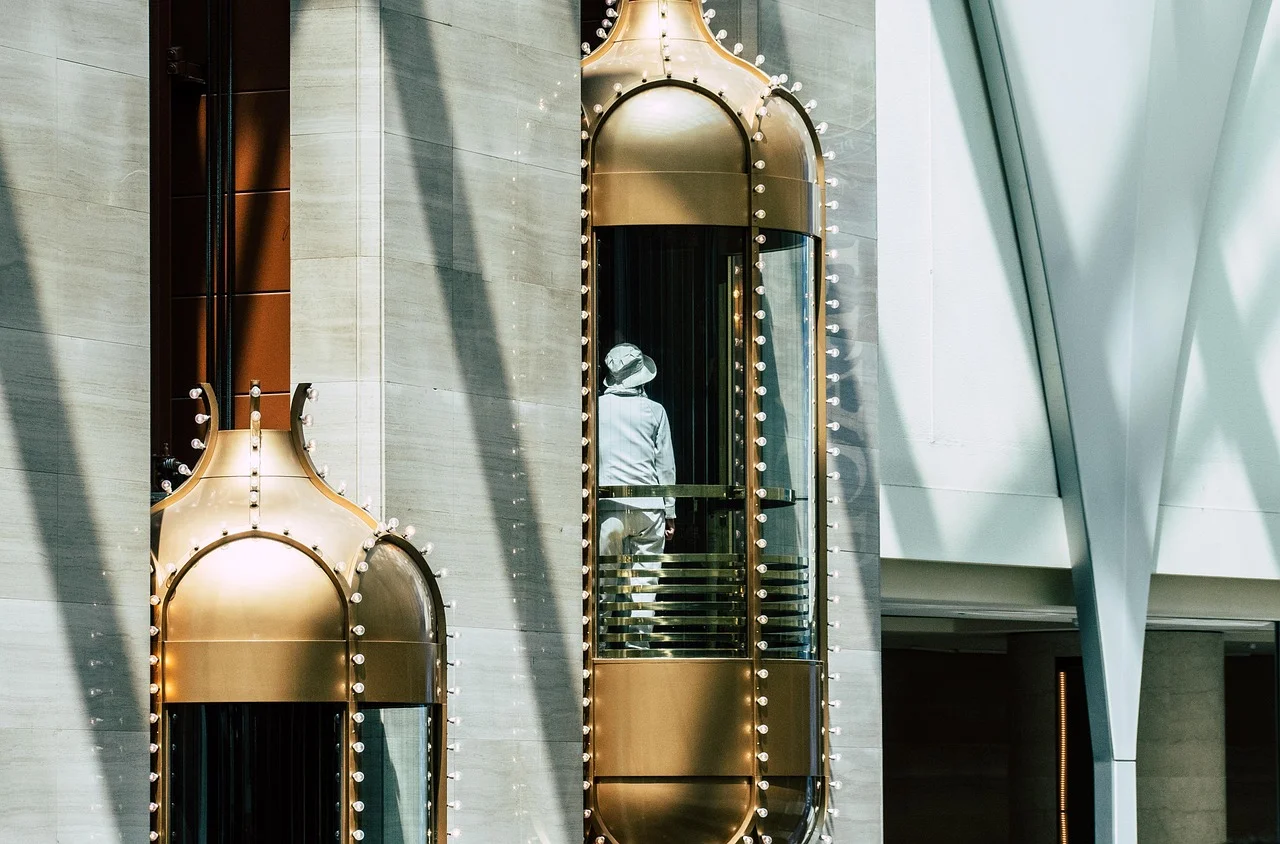
Image by wal_172619 from Pixabay
References
- The Psychology of Waiting Lines | David Maister
- A Framework for Evaluating the Customer Wait Experience | Cornell eCommons
- The Effect of Attention and Working Memory on the Estimation of Elapsed Time | Scientific Reports
- Optimizing Waiting Experience | Scientific Reports
- 3 Important Reasons Why There Are Mirrors in Elevators | Psychology Today
Explore More
- Why does staring at a progress bar make waiting feel slower?
- Why do restaurant menus make table waits less annoying?
- Why does boredom make time drag?
- Why do elevators sometimes feel uncomfortable even when they are safe?
- What design tricks make small rooms feel larger?