
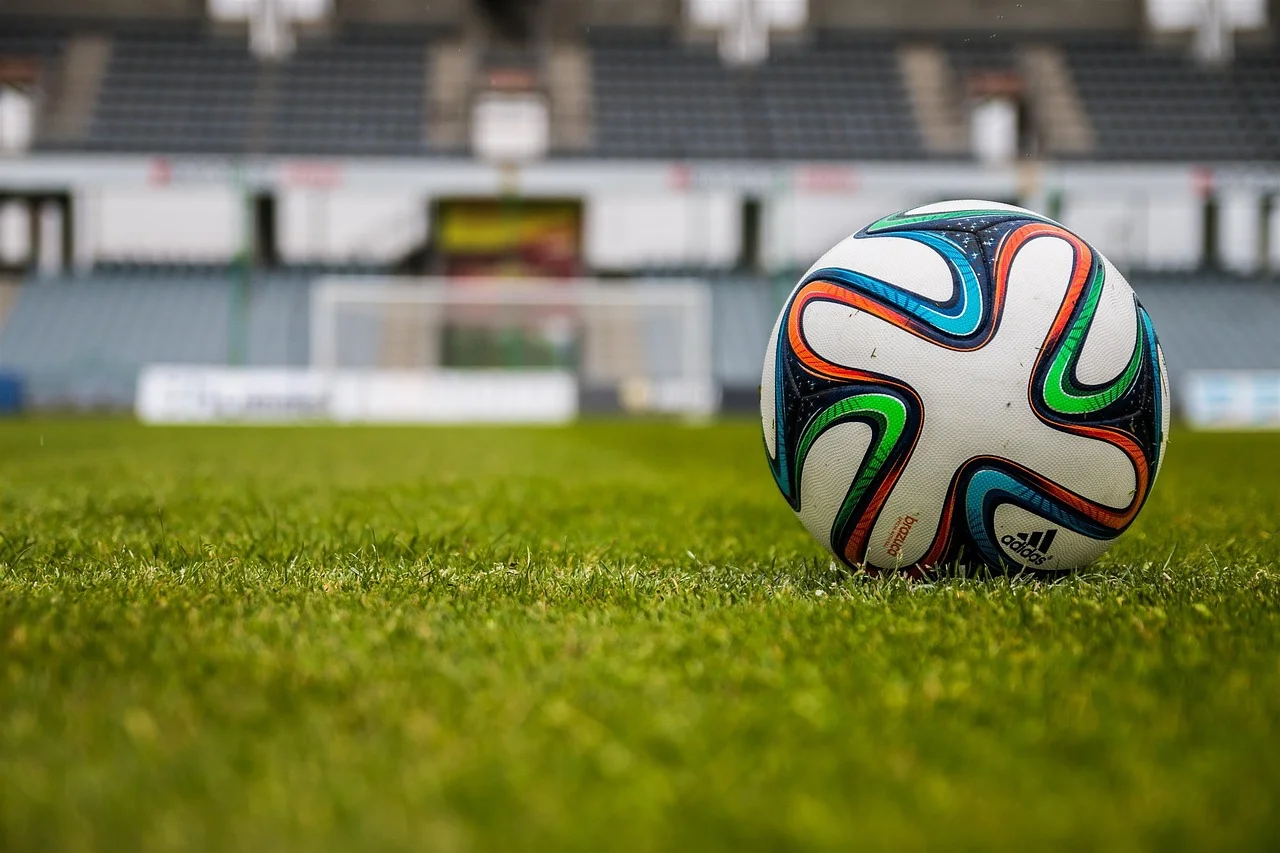
A modern soccer ball looks simple: a round ball, usually about the size your hands expect. But that familiar shape is the result of centuries of trial and error. The game needed a ball that was big enough to kick, light enough to fly, strong enough to survive tackles, and round enough to behave fairly for both teams.
Today, the basic adult match ball is tightly defined. Under Law 2 of the Laws of the Game, it must be spherical, made of suitable material, 68 to 70 centimeters in circumference, 410 to 450 grams at the start of the match, and inflated to a set pressure range. That is why official soccer balls around the world feel so similar even when the surface design changes.
Early footballs were much less standardized. One famous example, a ball found at Stirling Castle in Scotland and dated to around 1540 to 1570, was made from leather and a pig’s bladder. It measured only about 160 by 150 by 140 millimeters, roughly the size of a small melon, and was much smaller than today’s match balls.
The pig bladder mattered because it could hold air, but it did not naturally become a perfect sphere. Leather panels helped wrap and protect it, and stitching let makers pull the ball into a more useful shape. Over time, better cutting, stitching, and panel patterns made the ball rounder, more durable, and easier to control.
Standard size and weight became important because a bad ball can change the game. A heavy waterlogged leather ball, a soft ball, or an unevenly shaped ball can make passes, shots, and headers behave differently. Modern FIFA quality testing tries to reduce that unfairness by checking things such as circumference, weight, roundness, bounce, water absorption, pressure loss, and how well the ball keeps its shape.
The most famous visual step came with the adidas Telstar at the 1970 FIFA World Cup. Its black-and-white pattern was designed to stand out on black-and-white television, and FIFA says its 32 leather panels made it the roundest ball of its time. That design became so recognizable that many people still draw a soccer ball as black pentagons and white hexagons, even though many real match balls no longer look like that.
Modern balls kept changing because the surface of the ball affects flight. Leather gave way to synthetic materials and coatings that absorbed less water. Stitched panels gave way in many top match balls to thermally bonded panels. World Cup balls also experimented with fewer panels, different seam lengths, grooves, and textures.
That is not just cosmetic. Wind-tunnel and kicking-robot studies have shown that panel shape and panel orientation can affect drag and flight path. In plain language, the seams and surface are part of the ball’s steering system. A ball can be the same legal size and weight as another ball, but still move differently through the air.
So the soccer ball evolved in two directions at once. Its basic size and roundness became standardized so the game could be fair. At the same time, its materials, panels, seams, and surface texture kept changing as makers tried to build a ball that was rounder, drier, more predictable, and more exciting to play with.
References
- Law 2 – The Ball – IFAB
- FIFA Quality Programme for Footballs – FIFA
- The World’s Oldest Football – The Smith
- The adidas Telstar begins ball chain – FIFA
- Effect of panel shape of soccer ball on its flight characteristics – Scientific Reports
- Do you know the science behind the FIFA World Cup football? – Biolin Scientific
Explore More
- Why do some soccer balls seem to swerve more than others?
- Why did the black-and-white Telstar become the symbol of soccer?
- How do FIFA tests decide whether a ball is good enough for competition?
- Why did wet leather balls become a problem in older matches?
- How do seams and surface textures change the way a ball flies?