
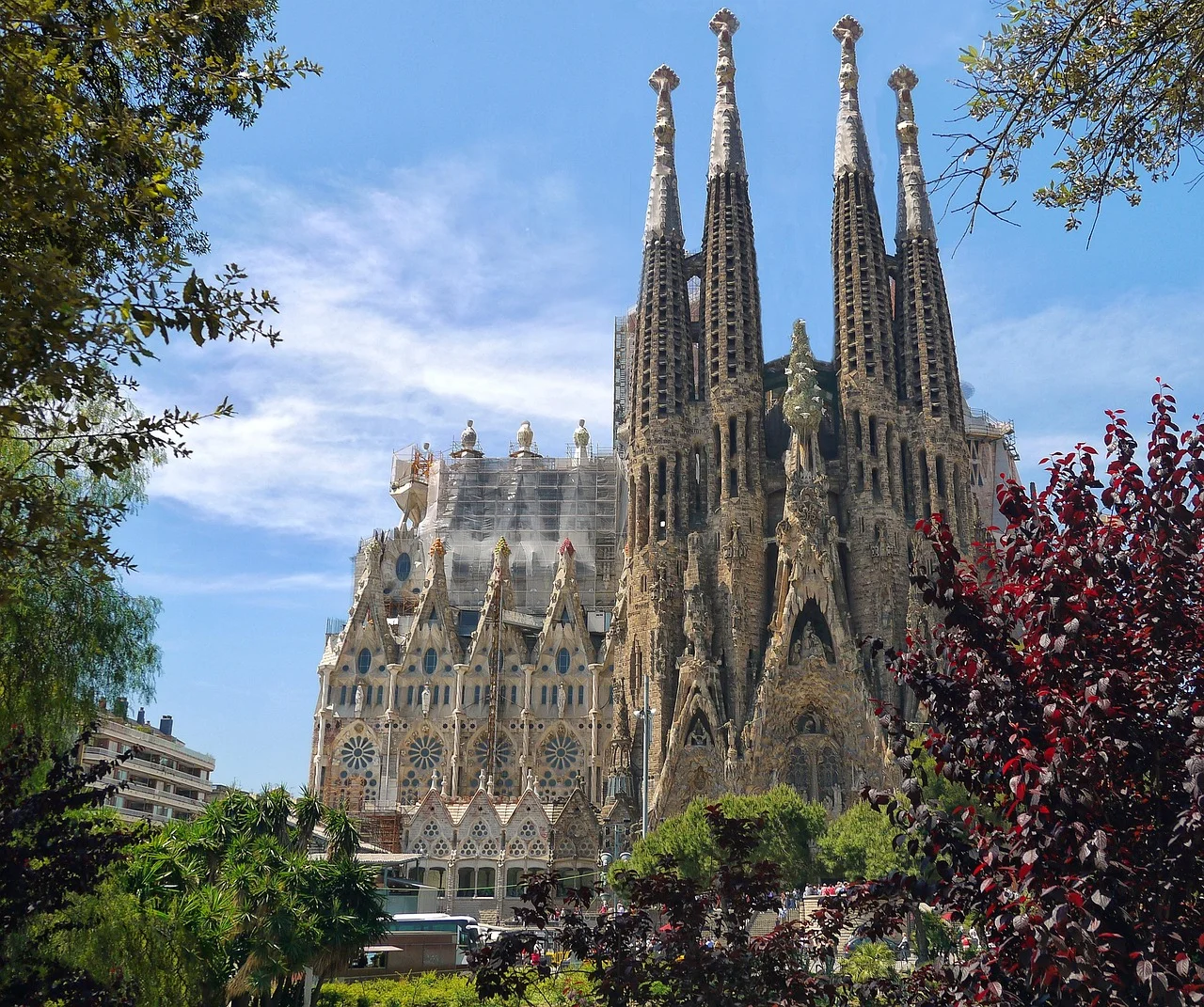
The Sagrada Familia is more than a delayed church: it is a huge stone experiment that has been passed from one generation to the next. Construction began in Barcelona on 19 March 1882, and more than 140 years later people are still watching it change.
The project did not even begin with Antoni Gaudi. The first design came from Francisco de Paula del Villar, who planned a more traditional neo-Gothic church. In 1883, Villar left after disagreements over materials and cost, and Gaudi took over. He pushed the design into something far stranger and more ambitious: a church full of branching columns, symbolic towers, sculpted facades, and geometry inspired by nature.
That ambition is one reason it took so long. Gaudi was not simply repeating a standard church plan. He was inventing forms that were difficult to draw, model, carve, and build. UNESCO describes his work as an exceptional creative contribution to architecture and construction technology, which is a polite way of saying: this was not a quick copy-and-paste building.
Gaudi also did not finish it himself. In 1914 he began working exclusively on the temple, but he died in 1926. The official history says the Saint Barnabas bell tower on the Nativity facade was the only tower he saw completed. After that, later architects and craftspeople had to continue from his models, drawings, photos, and the parts already built.
Then came a major disaster. During the Spanish Civil War in 1936, the Sagrada Familia was vandalized. Plans and photographs were burned, and plaster models were smashed. Work could continue only by using material saved from Gaudi’s workshop and reconstructing ideas from published plans and photographs. Imagine trying to finish a giant 3D puzzle after someone has burned part of the instruction book.
Money also shaped the pace. The Sagrada Familia is an expiatory temple, and its own foundation says it has always been funded through donations and contributions from private individuals. The official 2025 report says the basilica had €134.5 million in income, all from private sources, with just over half of expenses going to construction. That is a lot of money, but it also means the project has depended on public support, visitors, and long-term fundraising rather than a normal government construction budget.
Modern technology changed how the work happened. The main nave work reached a major point in 2010, when Pope Benedict XVI consecrated the basilica for worship. In the 2010s and 2020s, official milestones mention stone panels arriving for the central towers, while current reporting describes software and robotics in the stonework. Still, Covid-19 stopped construction in March 2020, another reminder that long projects collect every crisis that happens along the way.
The biggest recent milestone came in 2026, the centenary year of Gaudi’s death. The official site says the tower of Jesus Christ reached 172.5 metres, and Pope Leo XIV blessed it on 10 June 2026. That made the Sagrada Familia the tallest church in the world. But “tower complete” is not the same as “everything is finished.” Current reporting notes that work still remains on the Glory Facade, a monumental staircase, and related surroundings.
So why has it taken so long? Because it began as a privately funded religious project, became Gaudi’s lifetime experiment, lost key material in war, grew through slow handcraft, and later had to merge old models with modern engineering. The result is unusual: most buildings are finished before they become famous. The Sagrada Familia became famous partly because the world has been watching it being built.
Image by Patrice_Audet from Pixabay
References
- History of the Temple – Sagrada Familia
- The Foundation – Sagrada Familia
- Report – Sagrada Familia
- 100th anniversary of Antoni Gaudi’s death – Sagrada Familia
- Pope Leo XIV presides over solemn mass commemorating hundredth anniversary of Antoni Gaudi’s death and blesses tower of Jesus Christ – Sagrada Familia
- Works of Antoni Gaudi – UNESCO World Heritage Centre
- Gaudi’s Sagrada Familia finally shakes off its incompletable tag, as Pope prepares to inaugurate its tallest tower – The Art Newspaper
Explore More
- What parts of the Sagrada Familia did Gaudi actually see completed?
- Why is the Sagrada Familia called an expiatory temple?
- What makes Gaudi’s architecture so different from ordinary Gothic churches?
- Why is the Glory Facade still controversial in Barcelona?
- How did modern engineering help finish parts of Gaudi’s design?