- Your phone is basically a tiny two-way radio. It has a transmitter for sending signals and a receiver for listening. Instead of pushing electricity through a cable, it turns your voice, text, photo, or video request into radio signals that can travel through the air.
- A radio signal is a kind of electromagnetic wave. The phone does not send your whole message as a visible beam. It changes, or modulates, a radio wave so the wave carries information. In modern mobile networks, much of that information is handled in digital form.
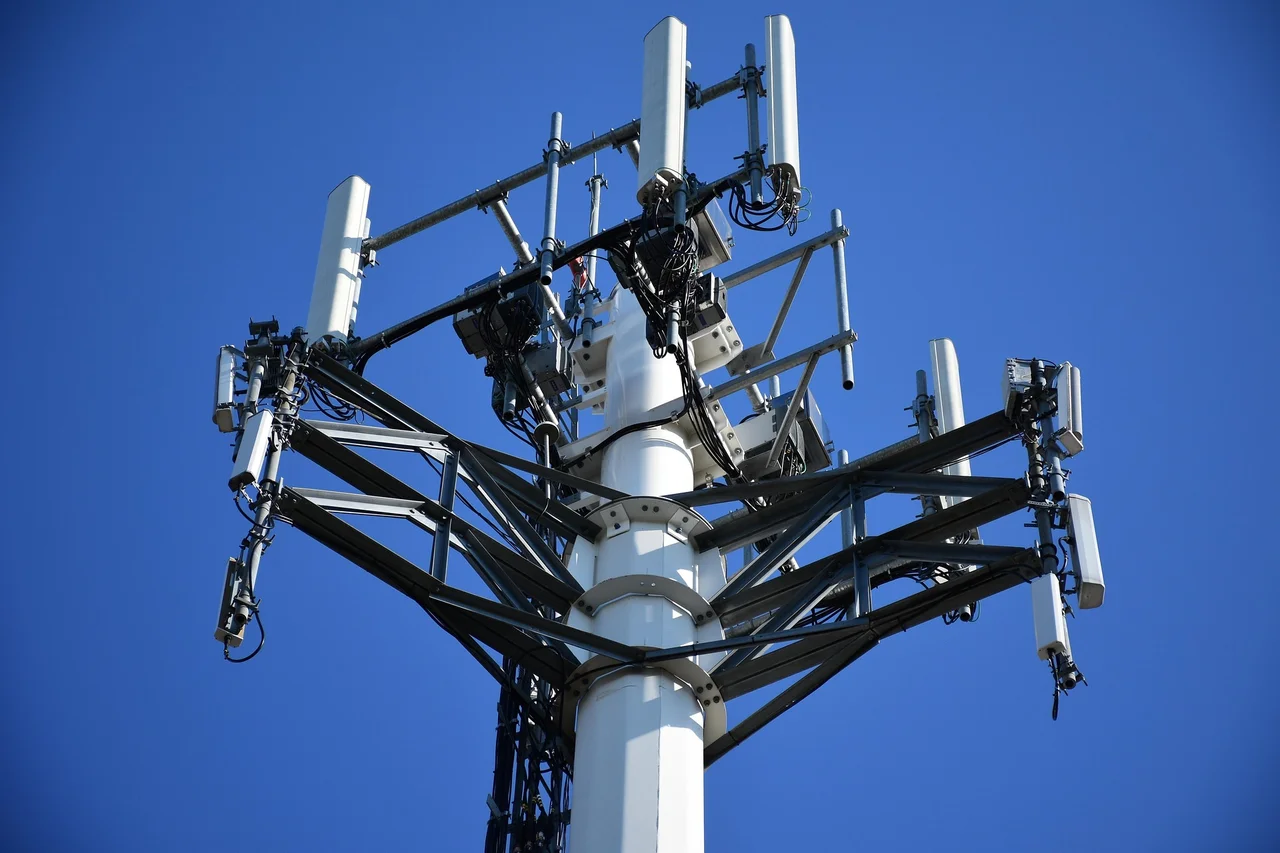
- The phone is not usually trying to reach another phone directly. It talks to a nearby base station, often mounted on a tower, pole, rooftop, or small indoor cell. That base station has antennas that send and receive radio signals. Think of it as the neighborhood doorway into the mobile network.
- Mobile networks are called cellular networks because the coverage area is split into many smaller areas called cells. Each cell is served by a base station. This lets the network cover a city, highway, or rural area with many local radio links instead of relying on one giant transmitter.
- After the base station receives your signal, it passes the data into the operator’s network. If you are calling another mobile phone, the network figures out where that phone is and routes the call toward another base station. If you are opening a website or sending a message through an app, the network connects your phone’s data session to the internet.
- The network also manages movement. When you are walking, riding a train, or sitting in a car, your phone keeps checking nearby base stations. If another one can serve you better during a call, the network can pass that call from one base station to another. That handover is why a call can keep going while you move across town.
- The “no wire” part is only true for the short hop between your phone and the nearby antenna. Behind the scenes, the base station still connects into the operator’s larger core network. So a mobile phone is wireless at the edge, but it still depends on a much bigger network behind it.
- Signal strength changes because radio waves have to cross real space. Distance, walls, hills, metal, glass, and the position of the antennas can all matter. When reception is poor, your phone may need to work harder to maintain the connection; when reception is good, it can usually use less power.
References
- ITU EMF Guide – Mobile Phones and Base Stations
- Mobile Phone Base Stations – EMF / Health Fact Pack
- Cell phone
- Radio transmission
- Radio waves