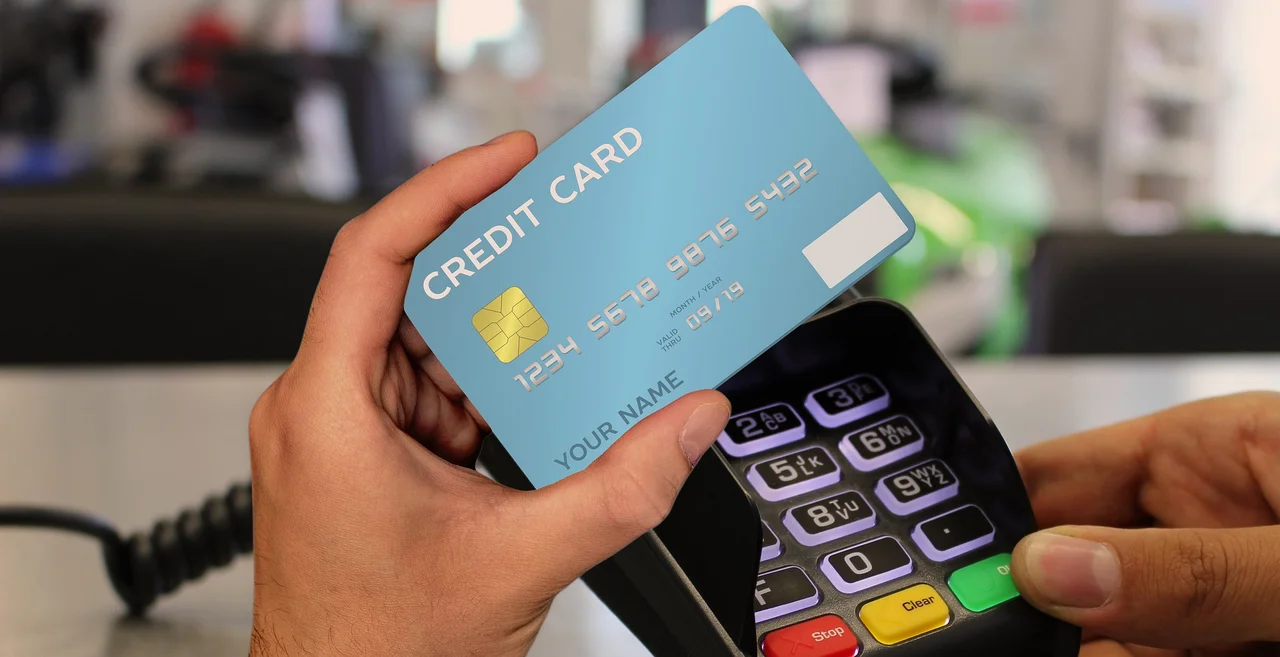
NFC, short for Near Field Communication, is the technology behind tapping your phone or card to pay, ride the subway, or unlock a door. The “near field” part is the giveaway: it only works when two devices are practically touching, within about 4 centimeters of each other. It is a close cousin of the RFID tags used on shop items, just tuned for short, two-way exchanges. So the real question has two halves: how does it sense the other device, and what is all that good for?
The heart of it is a trick called inductive coupling. One device, the reader, pushes an alternating current through a tiny coil of wire, which creates an oscillating magnetic field at a fixed radio frequency of 13.56 megahertz. When you bring a second coil, the one inside a card or tag, into that field, the changing magnetic field pushes a current through it. This is plain electromagnetic induction, the same principle as a transformer, just shrunk down. It is also why a contactless card needs no battery: the reader’s field is what powers the little chip inside it.
This also explains why the range is so stubbornly short. NFC leans on the magnetic field right next to the reader, the “near field,” rather than broadcasting radio waves across a room. That kind of magnetic coupling fades very quickly as you pull the two coils apart, so it simply stops working past a few centimeters. The short range is a feature, not a flaw. You have to deliberately tap, which makes it hard for someone across the room to eavesdrop or trigger a payment by accident.
Once the tag is powered up, it needs a way to answer back, and it does so without its own transmitter. The tag slightly changes the electrical load on its coil, and because the two coils are magnetically linked, the reader feels that change and reads it as data. This clever back-channel is called load modulation. The speeds are modest, around 106 to 424 kilobits per second, but a payment or a door unlock only needs to move a tiny bit of data, so that is plenty.
NFC can play three different roles depending on the job, and most modern phones can do all three:
- Reader/writer: your phone reads or writes a passive tag, like a smart poster that opens a webpage when tapped.
- Card emulation: your phone pretends to be a contactless card, which is how mobile payments and digital keys work.
- Peer-to-peer: two devices talk directly to each other to swap a small piece of data.
That flexibility is what gives NFC its long list of everyday uses. The most familiar is contactless payment, where services like Apple Pay and Google Pay let a phone or watch stand in for your bank card. The same tap powers transit cards on subways and buses, office and hotel keycards, and the little tags inside posters or product packaging. It is also a quiet helper for other wireless tech: tapping two gadgets together can hand off a Bluetooth or Wi-Fi connection so you skip the fiddly pairing menus.
Put it all together and you can see why NFC quietly ended up in almost every phone and bank card. It is cheap, because passive tags need no battery and barely any circuitry. It is secure enough for money, because the range is so short that you have to mean it. And it is effortless for people, because the whole interaction is just one tap, with no apps to open or codes to type.
References
- Near-field communication – Wikipedia
- NFC and How it Works – RFID4U
- Understanding NFC Reader, Card Emulation and Peer-to-Peer Modes – RFIDtag
Explore More
- How is NFC different from the RFID tags used in shops and warehouses?
- How do contactless payments stay secure with tokenization and encryption?
- Why is NFC so much slower than Bluetooth, and when does that matter?
- Can an NFC tag be cloned or hacked, and how do systems guard against it?
- How do you program your own NFC tags to automate things on your phone?