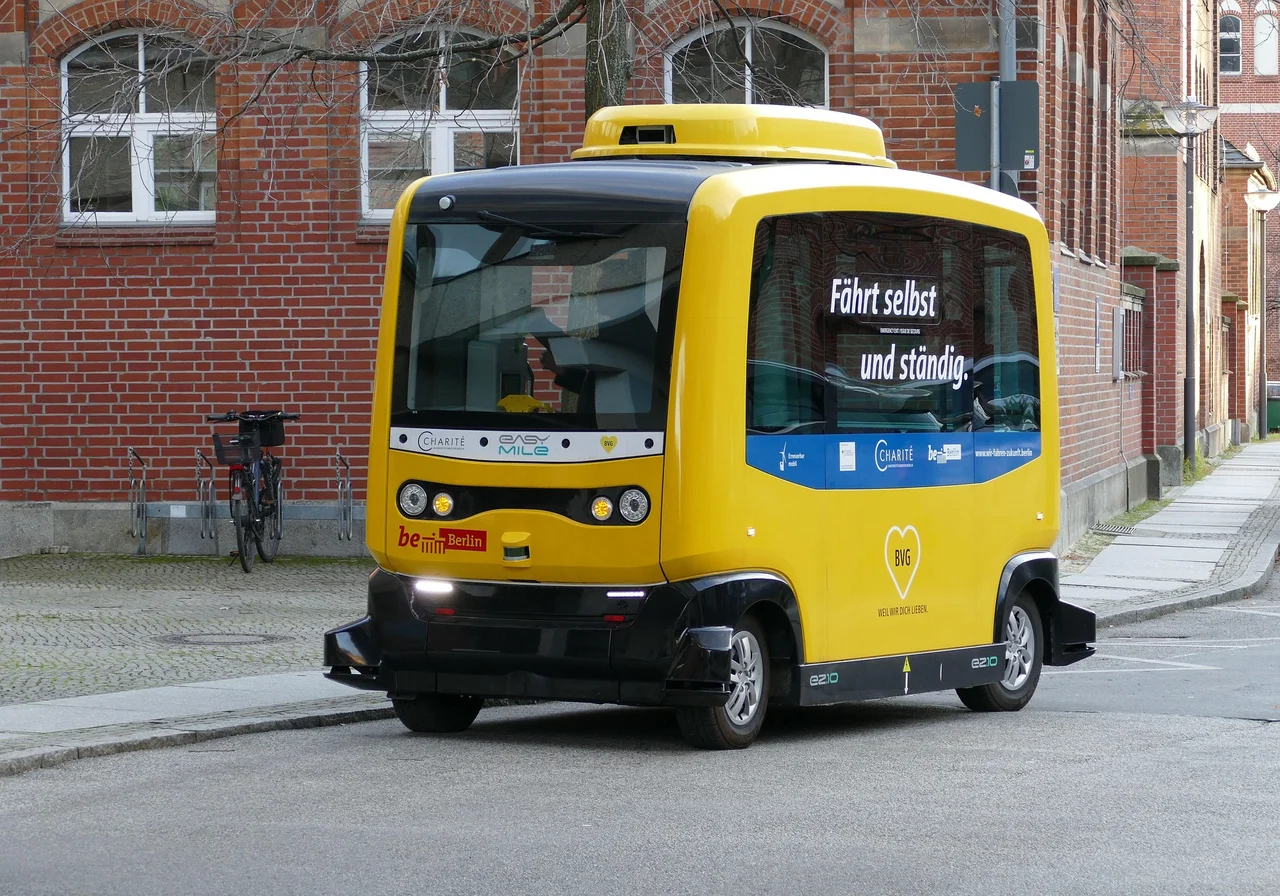
Imagine driving a car. You’re constantly aware of your surroundings, processing information from your eyes, ears, and even your sense of touch. You make decisions based on this information, adjusting your speed, steering, and braking to navigate safely and efficiently. Self-driving cars work in a similar way, but instead of relying on human senses, they use a combination of sophisticated sensors and advanced algorithms to understand their environment and make decisions.
Understanding the Environment:
Self-driving cars use a suite of sensors to “see” and “understand” their surroundings. These sensors include:
- Cameras: These cameras capture visual information like lane markings, traffic lights, pedestrians, and other vehicles.
- Lidar (Light Detection and Ranging): Lidar emits laser beams to measure distances and create a 3D map of the environment. This allows the car to detect objects, their size, and their location with high precision.
- Radar (Radio Detection and Ranging): Radar uses radio waves to detect objects, even in low-light conditions or through fog. It provides information about the speed and distance of objects.
- Ultrasonic Sensors: These sensors use sound waves to detect nearby objects, particularly for parking assistance and obstacle avoidance.
Making Decisions:
The data collected by these sensors is processed by powerful onboard computers that use advanced algorithms. These algorithms are designed to:
- Interpret the data: The computer needs to understand what it is seeing, for example, identifying a pedestrian, a traffic light, or a lane marker.
- Plan a route: Based on the perceived environment, the computer calculates a safe and efficient path to the destination.
- Control the vehicle: The computer sends signals to the car’s steering wheel, accelerator, and brakes to execute the planned route and avoid obstacles.
Deep Learning:
One of the key technologies driving the development of self-driving cars is deep learning. Deep learning algorithms, inspired by the structure of the human brain, can learn from vast amounts of data, allowing them to improve their ability to recognize objects and make decisions over time.
Safety and Ethics:
While self-driving cars hold immense potential for improving safety and efficiency, there are still challenges to overcome. Researchers are working on ensuring these vehicles are reliable, ethical, and safe in all situations, including unexpected or complex scenarios.
References
- Self-Driving Cars | NVIDIA
- How Autonomous Vehicles Work: the Self-Driving Stack
- How Do Self-Driving Cars Make Decisions? | NVIDIA Blog
- Teacher Update | Learn more: How do self driving cars navigate? | Encounter Edu
- How Do Self-Driving Cars Make Decisions? A Detailed Look at the AI Brains of Autonomous Vehicles
- Learn more: How do self driving cars navigate?
Explore More
- What are some of the ethical challenges of self-driving cars?
- How can we ensure the safety of self-driving cars in complex scenarios?
- What are the potential benefits and drawbacks of self-driving cars?
- What are the future directions of self-driving car technology?
- How will self-driving cars impact the transportation industry?