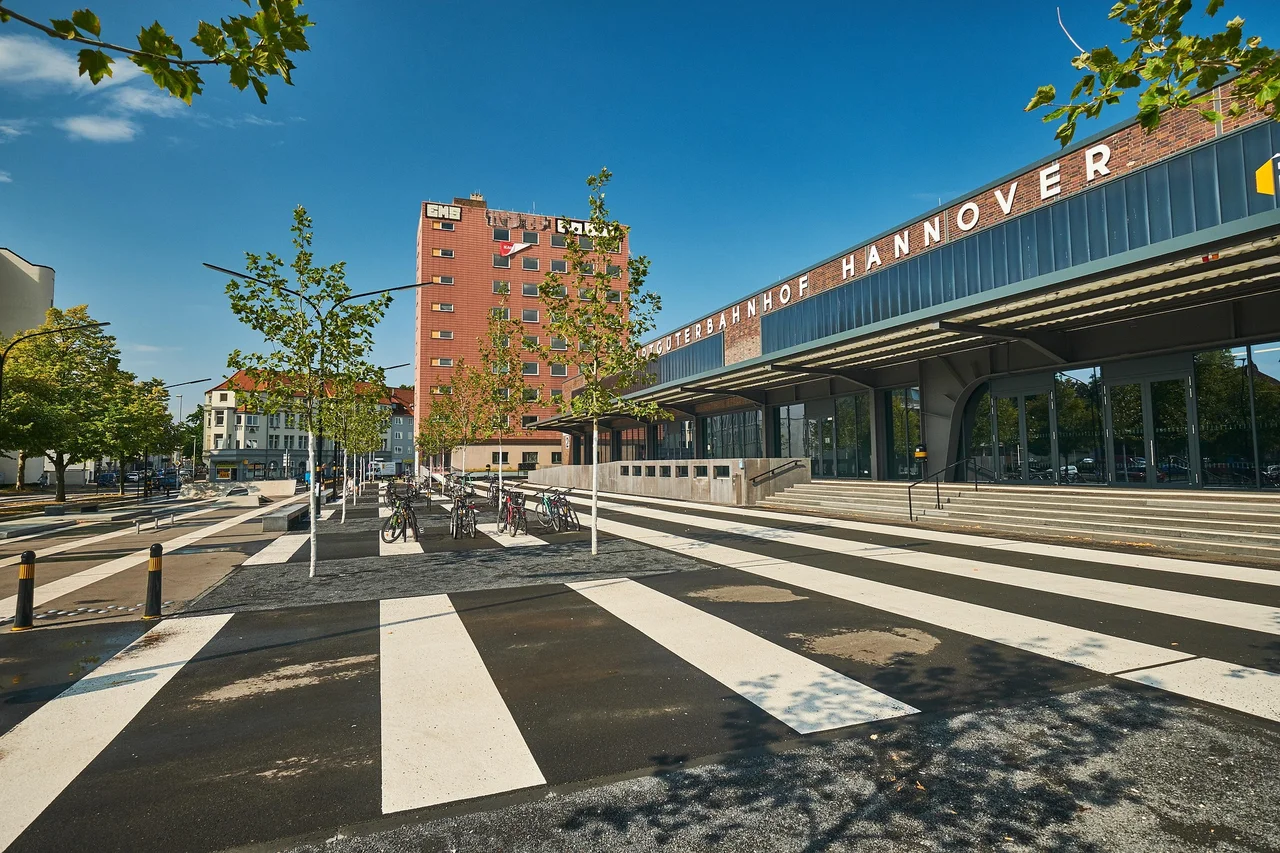
Imagine a bustling city center where you can easily walk from your apartment to the train station, hop on a train to work, and then walk to your office, all without needing a car. That’s the basic idea behind Transit-Oriented Development (TOD).
TOD is a way of designing cities and towns to encourage people to use public transportation. Instead of spreading out homes and businesses in sprawling suburbs, TOD focuses on building dense, walkable neighborhoods right around train stations, bus stops, or other public transit hubs.
Think of TOD as a hub where everything you need is within a short walk or bike ride. This means having a mix of housing, shops, restaurants, offices, and parks all close together. TOD makes it convenient and enjoyable to use public transportation, which reduces traffic, air pollution, and our dependence on cars.
TOD is a type of urban planning that prioritizes public transportation, creating vibrant and sustainable communities around transit hubs. It promotes a symbiotic relationship between dense, compact urban form and public transport use.
Here’s how it works:
- Central Transit Stop: TODs are centered around a central transit stop, such as a train station, light rail stop, or bus terminal.
- High-Density, Mixed-Use Development: A dense, walkable area with a mix of residential, commercial, and recreational uses is built within walking distance of the transit stop.
- Pedestrian-Friendly Design: TODs prioritize pedestrians with features like sidewalks, bike lanes, and wide streets.
- Reduced Car Dependency: The goal is to reduce reliance on cars by making it easy and convenient to live, work, and play without needing to drive.
Real Examples of TODs:
- Curitiba, Brazil: Curitiba is considered one of the pioneering examples of TOD. The city’s innovative bus rapid transit system (BRT) has integrated with its urban planning, creating walkable, mixed-use neighborhoods around BRT stations.
- Portland, Oregon, USA: Portland has embraced TOD to revitalize its urban core and promote sustainability. The city’s light rail system, MAX, is integrated with walkable neighborhoods, creating vibrant communities around stations.
- Vancouver, British Columbia, Canada: Vancouver has implemented TOD policies to promote density and reduce sprawl. The city’s SkyTrain system, with its network of stations, has spurred development of walkable neighborhoods and mixed-use areas around transit hubs.
- Tokyo, Japan: Tokyo’s extensive and well-integrated rail system has been a catalyst for TOD development. Many neighborhoods have sprung up around train stations, offering convenient access to shops, offices, and residential areas.
- The King’s Cross development in London: This area was once a rundown industrial zone but has been transformed into a vibrant, mixed-use area around a major train station. It features new apartments, office buildings, shops, restaurants, and even a new theatre.
- The Hudson Yards neighborhood in New York City: This is a brand new development built around a subway station, with office buildings, luxury apartments, and a huge public park.
- The South Lake Union neighborhood in Seattle: This area was once mostly industrial but has been revitalized with a mix of residential and commercial buildings, shops, restaurants, and a public park, all within a short walk of the bus and light rail lines.
Benefits of TOD:
- Reduced Traffic Congestion: Encourages people to use public transport, leading to fewer cars on the roads.
- Improved Air Quality: Less car dependence translates to lower emissions and a cleaner environment.
- Increased Property Values: TODs are often popular and desirable places to live, leading to higher property values.
- More Affordable Housing: TODs often feature a mix of housing options, including more affordable units.
- Improved Quality of Life: TODs create vibrant and walkable communities with a stronger sense of place.
TOD is an essential approach to sustainable urban development, promoting healthier, more connected, and environmentally friendly cities.
References
Explore More
- What are the benefits of TOD for the environment?
- How does TOD impact the economy of a city?
- What are some challenges faced in implementing TOD projects?
- What are some examples of TOD in your own city or town?