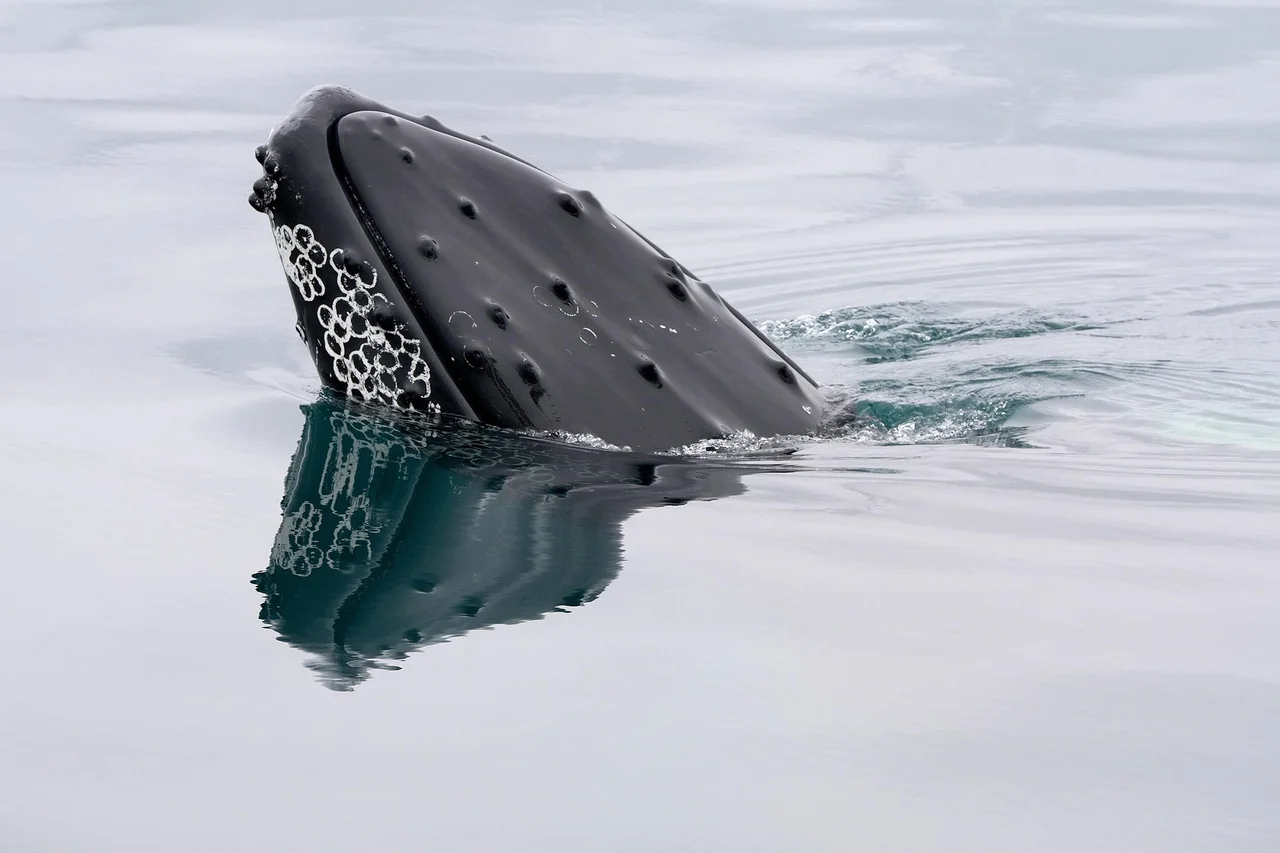
Yes, whales are mammals. They are not fish, even though they live their whole lives in the water and have smooth, fish-like bodies. Like other mammals, whales breathe air with lungs, are warm-blooded, give birth to live young, and feed their babies milk.
That is why a whale calf has two urgent jobs after birth: it needs air, and it needs milk. The air part happens at the surface. The milk part can happen underwater, which sounds impossible until you remember that whales have had millions of years to adjust mammal equipment to ocean life.
Whale mothers have mammary glands, but they do not have exposed nipples the way many land mammals do. In whales and dolphins, the mammary glands sit inside folds of skin called mammary slits on the underside of the body.
When the calf is ready to feed, it swims under or beside its mother and lines up near the mammary slit. The calf may hold its mouth or tongue around the nipple area, and the mother can eject thick milk into the calf’s mouth. It is less like a baby calmly drinking from a bottle and more like a quick underwater pit stop.
The milk itself helps solve the water problem. Whale milk is rich in fat and nutrients, so it is thicker than the milk humans drink. That means it does not instantly vanish into the sea like a splash of skim milk in a sink. Some scientific observations of humpback whales even recorded milk staying together in the water column for a short time before slowly spreading out.
Nursing sessions can also be short. In one study of humpback whales, calves were filmed in nursing positions for only seconds at a time, often at depth rather than right at the surface. NOAA describes humpback mothers aligning with their calves and squirting thick, rich milk into the calf’s mouth while the calf increases its swimming effort.
Different whale groups do not all nurse in exactly the same schedule. Baleen whales, such as humpbacks and blue whales, often use an intense strategy: the mother builds up body reserves, then gives very rich milk while the calf grows quickly. Toothed whales may nurse over longer periods, because their calves have longer development and complex social behavior.
So the simple answer is: whales are mammals, and they nurse with mammal milk. The ocean version is just specialized. Hidden mammary slits, high-fat milk, short feeding dives, and a mother that can push milk toward the calf all make breastfeeding work in a place where ordinary mammal nursing would be a mess.
References
- Are whales mammals or fish? – Whale & Dolphin Conservation USA
- Whales and Dolphins – Smithsonian Ocean
- Hey Mom – It’s Dinner Time! New Research Sheds Light on Humpback Whale Nursing Behavior – NOAA Office of National Marine Sanctuaries
- Underwater nursing: how marine mammals feed their babies – Nature Scitable
- A Note on Suckling Behavior and Laterality in Nursing Humpback Whale Calves from Underwater Observations – Animals
- A Whale of a (Milk) Tale – International Milk Genomics Consortium
Explore More
- Why do whales breathe air if they live in the ocean?
- How fast can a blue whale calf grow on milk alone?
- Why do some whale calves stay with their mothers longer than others?
- How do scientists study whale nursing when it happens underwater?
- What makes whale milk so different from human milk?